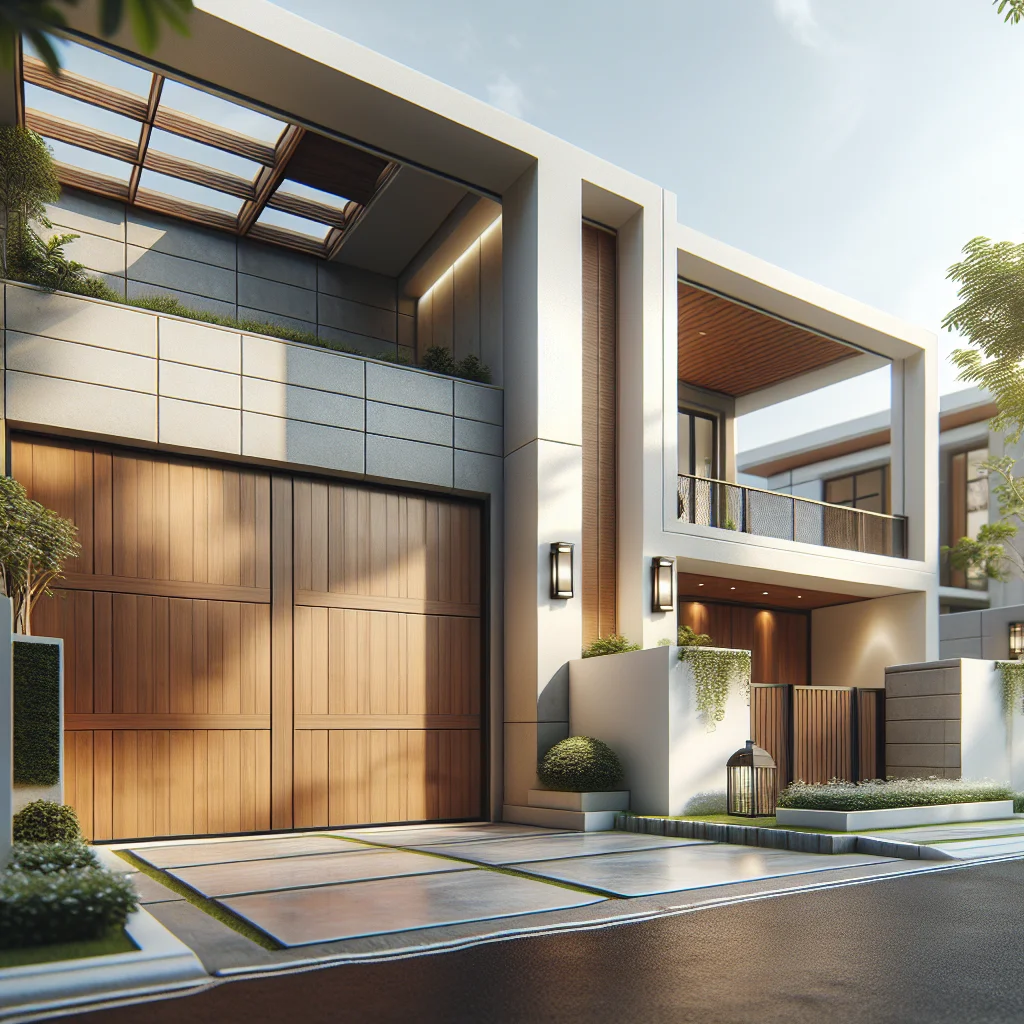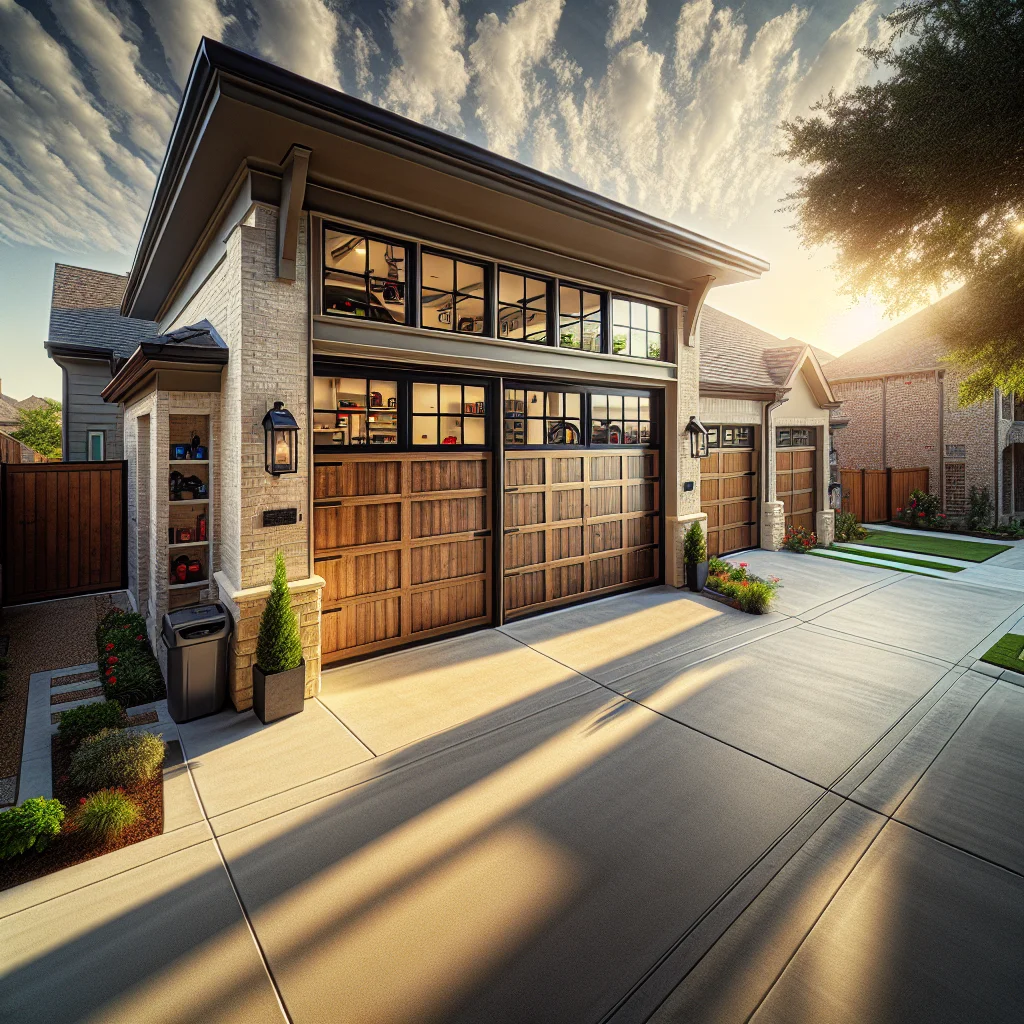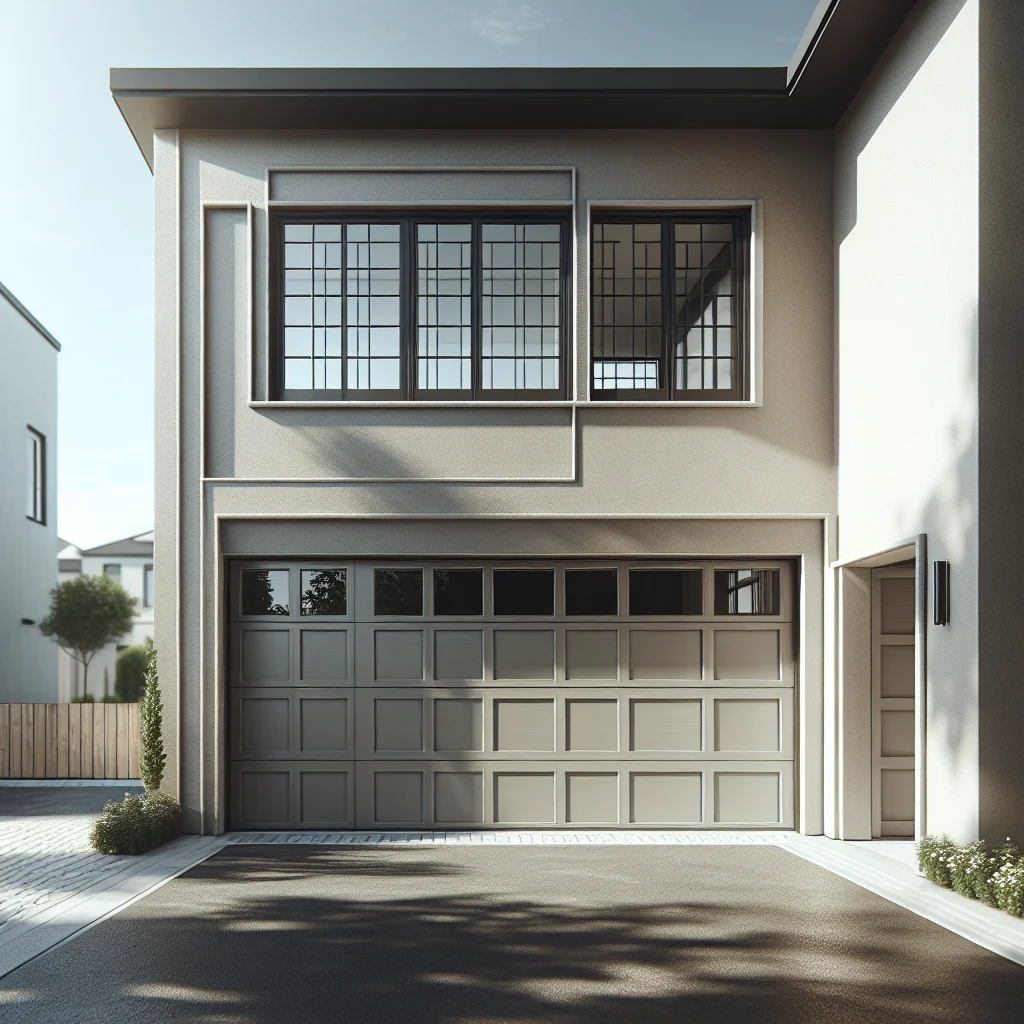
Your garage door makes up as much as 30% to 40% of your home's front profile. When you drive down the street in your Garland neighborhood—whether you live near Lake Ray Hubbard, close to Firewheel Town Center, or in an established neighborhood off Centerville Road—your garage door is one of the very first features people notice.
Over time, daily wear, harsh Texas weather, and accidental impacts take a toll. A dented, faded, or warped section destroys your home’s curb appeal, lowers property value, and signals to potential home buyers or neighbors that the house might have maintenance issues.
Fortunately, you do not always have to pay thousands of dollars for a full replacement. Expert garage door panel repair Garland TX services offer an efficient, cost-effective way to fix cosmetic and structural damage, saving you money while making your home look brand-new.
1. The Real Impact of Garage Door Damage on Garland Homes
Garage doors are built to withstand heavy daily use, but they are not indestructible. In Garland, Texas, unique environmental conditions work alongside everyday accidents to cause panel damage.
North Texas Weather: The Ultimate Endurance Test
Garland experiences extreme weather swings throughout the year.
- Severe Summer Heat: High temperatures and prolonged UV exposure cause paint to fade, peel, and chalk. Polymer and vinyl sections degrade, while dark-colored steel doors absorb heat that degrades internal insulation core materials.
- Hail and Windstorms: Spring in Dallas County brings severe thunderstorms capable of delivering hail. Hailstones dent aluminum and thin steel sections, creating a dimpled surface that ruins light reflection and aesthetics. High wind speeds throw yard debris, branches, and trash cans directly against the door.
- Rapid Humidity Shifts: Moisture swings cause wood garage doors to expand and contract. Over time, wood sections warp, split, rot, or swell, making smooth track operation nearly impossible.
+------------------+------------------------------------+-------------------------------------------+
| Damage Type | Primary Cause | Aesthetic & Functional Consequence |
+------------------+------------------------------------+-------------------------------------------+
| Dents & Creases | Vehicle bumps, baseballs, hail | Destroys curb appeal; jams track rollers |
| Warping & Rot | Wood moisture exposure, humidity | Binds door, strains opener motor |
| Paint Peeling/UV | Direct Texas sunlight, age | Chalking, fading, rust vulnerability |
| Section Sagging | Strained hinges, failing springs | Misaligned panels, structural gaps |
+------------------+------------------------------------+-------------------------------------------+
Accidental Physical Impacts
Vehicle bumps are the leading cause of sudden panel damage. Backing out too fast before the door fully opens, a foot slipping off the brake pedal, or a child’s bicycle crashing into the bottom panel can easily bend steel or crack fiberglass. Even a minor dent on a single panel compromises the aesthetic uniformity of the entire door face.
The True Cost to Property Value
According to real estate market analyses across the Dallas-Fort Worth Metroplex, replacing or fully repairing an unsightly garage door offers one of the highest returns on investment (ROI) of any home improvement project. A damaged garage door creates an immediate negative impression, causing potential buyers to assume the home's unseen systems (like HVAC, plumbing, or roofing) are similarly neglected.
2. Common Garage Door Panel Problems & How to Identify Them
Recognizing the early warning signs of panel degradation prevents cosmetic flaws from escalating into costly mechanical failures.
[VISUAL PANEL INSPECTION CHART]
|
+------------------------+------------------------+
| |
[COSMETIC DAMAGE] [STRUCTURAL DAMAGE]
| |
+------+------+ +------+------+
| | | |
Dents / UV Fading / Cracks / Panel / Track
Scratches Chalking Breaks Misalignment
1. Dents, Creases, and Dings
Steel and aluminum sectional doors are vulnerable to impact dents.
- Surface Dents: Minor indentations that only affect appearance.
- Creased Dents: Creases stretch the metal beyond its natural shape, weakening structural integrity. Creases near the center hinge points often cause panels to sag or bow during travel.
2. Cracks and Tears
Cracks occur frequently on non-steel doors or along stress points in thin-gauge steel:
- Wood Doors: Cracks develop along natural grain lines due to drying out under the intense Texas heat.
- Steel Doors: Metal fatigue around stress points—especially where the top section connects to the garage door opener arm—creates horizontal cracks that spread across the section.
3. Fading, Discoloration, and Rust
When protective clear coats fail under harsh UV rays, paint begins to chalk and peel. Once raw metal is exposed to moisture, rust forms fast. Rust stains stain neighboring panels and eat away at the metal, eventually causing holes that compromise security and insulation.
4. Warping, Bowing, and Misalignment
When a panel warps, it no longer sits flush against the weather seal or neighboring sections.
- Visible Gaps: Light leaks through between sections when the door is down.
- Popping Sounds: As the door travels around the track radius, warped panels bind, producing loud popping or grinding noises.
3. The Science Behind Garage Door Panels: Material Comparison
Understanding what material your door is made of helps determine the best repair or section replacement strategy.
+------------------+-----------------------+--------------------+------------------------+
| Material | Durability | Repairability | Texas Climate Risk |
+------------------+-----------------------+--------------------+------------------------+
| Galvanized Steel | High | High (Sectional) | Rust if paint scratches|
| Real Wood | Moderate to High | Moderate (Custom) | Warping, Rotting |
| Aluminum | Moderate | Moderate | Denting from Hail |
| Composite/Vinyl | Very High | Low (Needs Replace)| Low (Resists heat) |
+------------------+-----------------------+--------------------+------------------------+
Steel Doors
Most homes in Garland feature multi-layer sectional steel doors. These range from single-layer non-insulated steel to three-layer "sandwich" doors (steel + polyurethane/polystyrene insulation + steel).
- Repair Strategy: Minor dings can be filled or straightened. Badly bent panels are best addressed by swapping out the individual affected section.
Wood Doors
Real wood doors offer high aesthetic appeal but demand continuous maintenance.
- Repair Strategy: Wood fillers, epoxies, and structural bracing work well for small cracks and minor surface rot. Severely rotted or structurally compromised panels require custom woodworking to match existing profiles.
Fiberglass and Aluminum
Aluminum panels resist rust in high-humidity areas, but they dent easily due to the soft nature of the metal. Fiberglass resists dents, but extreme temperature shifts can cause it to turn brittle and crack over time.
4. Panel Repair vs. Full Door Replacement: Decision Framework
Homeowners often ask: "Should I repair the damaged panel or replace the entire garage door?"
Follow this decision rule to determine the most cost-effective path:
Is structural integrity compromised?
|
+----------------+----------------+
| |
YES NO
| |
Is door >15 yrs old OR Are 3+ panels damaged?
are >2 panels damaged? |
| +--------+--------+
+-----+-----+ | |
| | YES NO
YES NO | |
| | Replace Door REPAIR PANEL
Replace Door REPAIR PANEL
When to Choose Panel Repair:
- Single-Panel Damage: Only one or two panels are dented or damaged, and the rest of the door is in great condition.
- Recent Door Models: The door was manufactured within the last 10–12 years, meaning matching replacement panels are readily available from manufacturers like Clopay, Amarr, or Wayne Dalton.
- Sound Mechanical Hardware: Springs, rollers, tracks, and cables show no severe wear or corrosion.
- Budget Constraints: Replacing a single section typically costs a fraction of an entire replacement door system.
When Full Replacement Is Recommended:
- Multiple Damaged Sections: Replacing 3 or more sections on a 4-section door usually costs as much as buying a brand-new door assembly.
- Obsolete Door Models: If the manufacturer went out of business or discontinued the specific panel pattern, finding an exact match is impossible.
- Extensive Age and Wear: If the door is over 15 to 20 years old, putting new panels on old hardware creates mismatched wear rates, leading to frequent breakdowns.
- Structural Track/Frame Shift: If an impact pushed the entire door frame off-square, replacing panels alone will not fix mechanical binding.
For authoritative guidelines on residential building safety standards, consult the International Code Council (ICC).
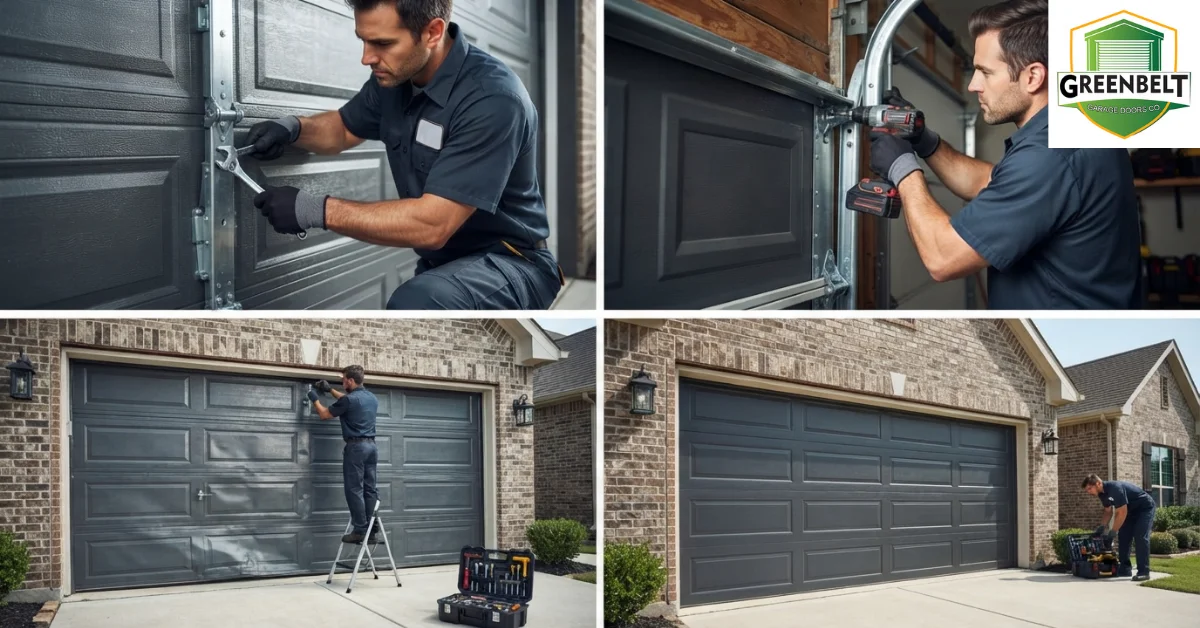
5. Step-by-Step Breakdown: Professional Garage Door Panel Repair
Fixing a damaged panel requires technical precision, specialized tools, and a strict adherence to safety protocols.
<Sequence>
<Step title="Step 1: Safety Isolation & Torsion Spring Discharge Protection" subtitle="Mandatory Safety Protocol">
Garage doors rely on high-tension torsion or extension springs that store hundreds of pounds of energy. Before any panel work begins, technicians disconnect the automatic opener arm and secure the spring assembly with winding bars and vise grips to prevent sudden movement.
</Step>
<Step title="Step 2: Section Unbolting and Disassembly" subtitle="Precision Hardware Management">
Hinges and roller brackets attached to the damaged panel are carefully unbolted. If repairing the bottom panel, the bottom brackets holding the high-tension lifting cables must be handled under strict safety procedures to prevent injury.
</Step>
<Step title="Step 3: Section Removal and Alignment Verification" subtitle="Track Inspection">
The damaged panel is removed from the vertical tracks. Technicians use laser levels and track gauges to confirm that the vertical and horizontal tracks remained plumb and square after the initial impact.
</Step>
<Step title="Step 4: Metal Restructuring, Filling, or Panel Swap" subtitle="Core Panel Work">
Minor Dent Repair: Specialty auto-body techniques, hammer-and-dolly sets, or dent pullers reshape the steel, followed by high-strength exterior filler sanding.
Panel Replacement: The new panel section is slotted into position, ensuring male-and-female tongue-and-groove joints align flush.
</Step>
<Step title="Step 5: Hinge Re-installation & Reinforcement Strut Integration" subtitle="Structural Rigidity Boost">
Hinges are reinstalled using heavy-gauge fasteners. On wider double-car doors, an aluminum or steel horizontal strut is installed across the interior of the new section to provide extra wind-load resistance against Texas storms.
</Step>
<Step title="Step 6: Balance Testing and System Recalibration" subtitle="Final Quality Check">
The technician reconnects the spring assembly, releases the track clamps, and performs a manual balance check. The door must stay balanced in mid-travel without drifting up or sliding down on its own. Finally, opener limits and auto-reverse force safety tests are conducted.
</Step>
</Sequence>
6. DIY vs. Professional Garage Door Panel Repair
Many homeowners consider repairing dents themselves using basic tools, heat guns, or auto-body filler. While simple cosmetic touch-ups can be done at home, structural section repairs carry major risks.
+----------------------------+-----------------------+------------------------+
| Factor | DIY Approach | Professional Service |
+----------------------------+-----------------------+------------------------+
| Extreme Spring Hazard | HIGH RISK of Injury | Safe (Certified Techs) |
| Structural Alignment | Difficult to Gauge | Laser Alignment |
| Paint/Pattern Matching | Rarely Flawless | Factory-Direct Match |
| Warranty Protection | None | Labor & Parts Warranty |
| Tool Requirements | Specialized Winding | Industrial grade equipment |
+----------------------------+-----------------------+------------------------+
The Hazards of High-Tension Components
Garage door spring systems are under immense tension. Attempting to unbolt lower track brackets or panel hinges without understanding how spring force distributes can cause cables to snap or springs to unwind rapidly, posing serious risks of injury or property damage.
For detailed occupational safety guidance regarding overhead doors and spring assemblies, check out OSHA Safety Guidelines.
Precision Panel Sourcing
Garage door manufacturers alter panel profiles, paint finishes, tongue-and-groove joint styles, and window insertion moldings every few years. Sourcing an exact factory-matched section requires access to commercial distributor networks and precise model/serial number cross-referencing.
7. Preventive Maintenance to Protect Your Panels
Once your garage door panels are repaired, a simple preventive maintenance routine will keep your door operating smoothly and looking great for years to come.
1. Biannual Visual & Audible Audits
Every six months, stand inside your garage with the door closed and check for light gaps between the panels. Listen for unusual scraping, squeaking, or popping sounds while opening and closing the door.
2. High-Performance Surface Protection
- Metal Doors: Wash panels once a year with mild soapy water to eliminate chemical buildup, dirt, and lawn fertilizers. Apply a coat of quality liquid automotive wax to the exterior metal surface to shield it from Texas UV rays.
- Wood Doors: Inspect the bottom edge and joints every 12 months. Apply fresh exterior-grade sealer or paint as soon as finish cracking appears to keep moisture out.
3. Lubricate Moving Parts Regularly
Apply a silicone-based or lithium-based garage door lubricant to all hinges, rollers, end bearings, and spring coils twice a year. Avoid standard WD-40, as it acts as a solvent that washes away protective lubricants and attracts dirt and dust.
[SEASONAL MAINTENANCE SCHEDULE]
|
+----------------------------+----------------------------+
| |
[SPRING] [FALL]
- Wash panel faces with mild soap - Apply protective car wax to panels
- Inspect for storm/hail damage - Lubricate hinges, springs, and rollers
- Test auto-reverse safety sensors - Check bottom rubber seal for cracks
4. Adjust Tracks and Roller Clearances
Ensure track bolts remain tight. Loose tracks allow the door to wobble, putting uneven twisting stress on panel joints and causing early hinge failure.
Learn more about home maintenance checklists and consumer home improvement standards from the Federal Trade Commission Consumer Advice.
8. Real-World Garland Troubleshooting Scenarios
Scenario A: The Back-Up Bump in Firewheel
- Problem: A driver shifted into reverse before the garage door finished opening, causing the top section of the door to catch on a vehicle roof rack. The top panel buckled down the center, and the opener trolley arm tore away from the mounting sheet metal.
- Diagnosis: The remaining three sections were damage-free, and the tracks remained square.
- Solution: The broken top section was swapped for a new factory-matched section. A heavy-duty steel operator reinforcement bracket was installed to secure the trolley connection, restoring full operation without replacing the entire door.
Scenario B: Weathered Wood Panels off Centerville Road
- Problem: An established home with custom cedar-clad garage door panels showed signs of surface splitting and dark rot along the bottom edge due to rainwater bouncing off an un-guttered driveway.
- Diagnosis: Structural framing inside the panels remained intact, but the lower cedar cladding was deteriorated.
- Solution: Rotting trim sections were cut back, treated with wood hardeners, and rebuilt using exterior-grade composite wood inserts before repainting. A wider bottom weather seal was installed to divert runoff away from the door base.
Frequently Asked Questions (FAQs)
Can you replace just one section of a garage door?
Yes, you can replace a single damaged section as long as the door manufacturer still produces that specific panel model and structural dimensions match.
How do I know who manufactured my garage door to find a matching panel?
You can find the manufacturer name, model number, and serial code on a sticker located on the inside edge of the panels or along the side track frame.
Will a new garage door panel match the color of my old panels?
While a new section comes with fresh factory paint, existing panels may have faded slightly from UV exposure, requiring a simple custom touch-up or full door paint wash for an exact match.
Can a dented aluminum or steel garage door panel be popped back out?
Minor, shallow dents can sometimes be leveled using specialized auto-body tools, but sharp creases stretch the metal permanently, making section replacement the safer and cleaner choice.
Final Thoughts
A dented, warped, or faded garage door does not mean you are stuck buying a costly full replacement system. Identifying structural issues early, opting for professional garage door panel repair Garland TX services, and following a consistent preventive maintenance routine will restore your home's curb appeal while saving you time and money. Protecting your investment ensures your home stays beautiful, secure, and functional for years to come.
How Can Greenbelt Garage Doors Co Help You?
Are garage door appearance problems ruining your home's curb appeal? Let the local experts help you fix it right the first time! At Greenbelt Garage Doors Co
, we specialize in professional, fast, and reliable garage door panel repairs, section replacements, and complete curb-appeal restorations tailored specifically to Garland homeowners.
Whether you need a single steel section replaced after an accidental dent, real-wood restoration, or a complete system tune-up, our experienced technicians deliver high-quality craftsmanship backed by dependable warranties.
- Business Address: Cedar Sage Dr, Garland, TX 75040, United States
- Direct Phone Line: (469) 369-1721
Call Greenbelt Garage Doors Co today at (469) 369-1721 to schedule your inspection and restore your garage door's performance and appearance!